
A trusted constant for families navigating complex care.
Because no family should have to navigate the journey alone.

HOW THE PROGRAM WORKS

TRANSITION HOME

IN THE NICU

Coordinating complex care from day one, with one trusted point of contact
One trusted point of contact
Coordinate specialists and care teams
Guide parents through complex decisions
Remove barriers to getting home
Families leave the hospital with a coordinated plan, not a list of paperwork
Arrange home equipment and supplies
Connect families with community resources
Prepare caregivers for life at home
Ensure a safe, coordinated transition
⟶
OUTPATIENT SUPPORT
Support continues long after discharge, as medical needs evolve
Attend key appointments
Coordinate ongoing care
Simplify complex medical journeys
Connect families to needed resources
⟶
WHY WE EXIST
Most medically complex babies leave the NICU without a dedicated care coordinator. Families are left to navigate specialists, therapies, equipment, insurance, and community resources on their own.
Little Heroes League fills that gap so babies can get home sooner - and families never have to navigate the journey alone.
Better support.
Better experiences.
Better outcomes.
When families have one trusted coordinator, the entire journey changes.
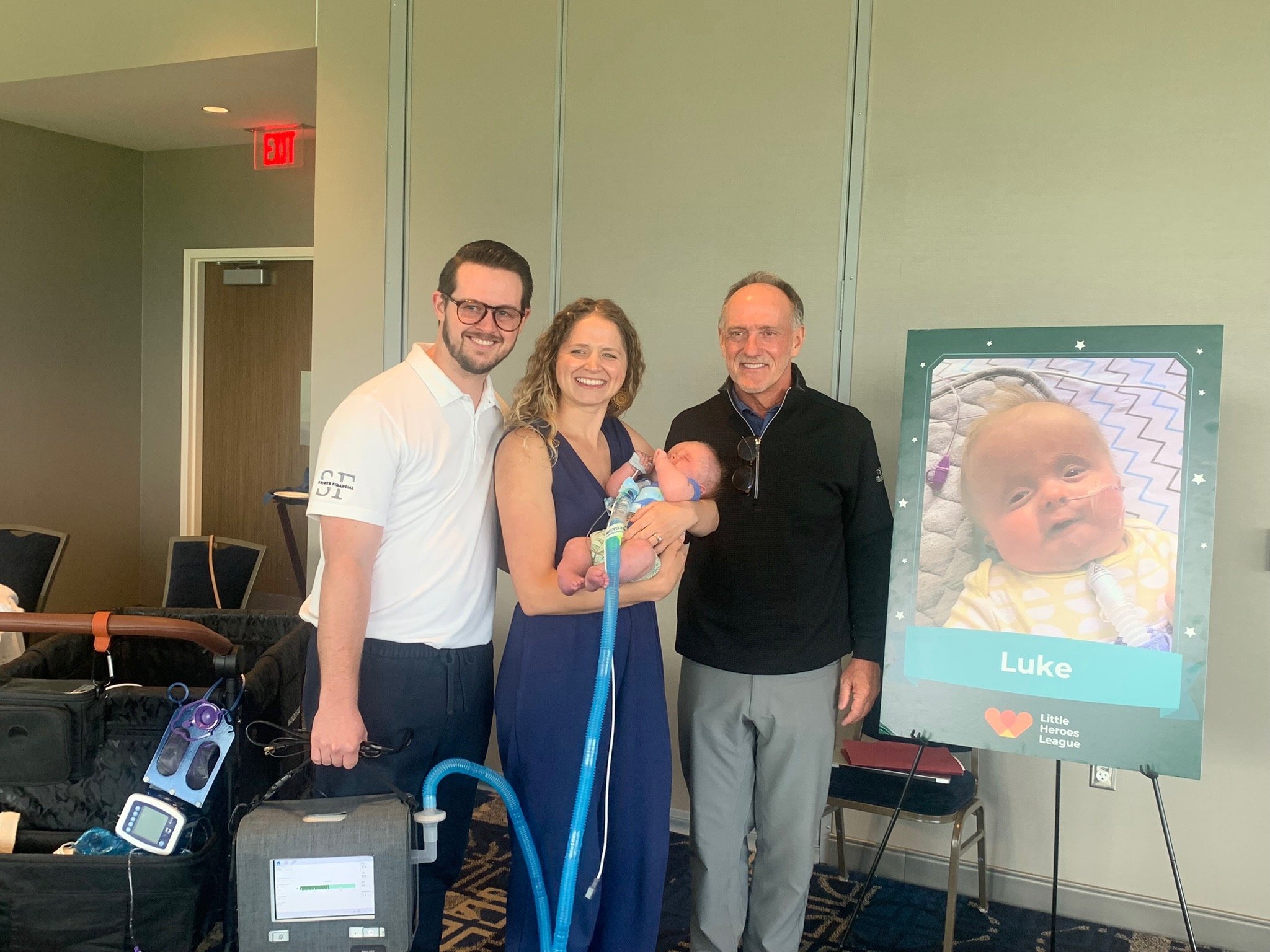
For Babies
Better coordinated care
More time at home
Earlier access to therapies
Fewer unnecessary procedures
For Families
One trusted point of contact
Less stress and uncertainty
Greater confidence at discharge
Better prepared to navigate complex care
OUR PROGRAM OUTCOMES
1200+
Children served across
partner hospitals
86% VS 76%
2-year survival rate
10 points above historical average
0%
Lost to follow-up
in peer-reviewed study
5
Top-ranked Level IV
NICUs nationwide
OUR STORY
It started with one little girl.
In her first year of life, Livi spent more than 150 days in intensive care across four hospitalizations. She underwent multiple major surgeries, relied on a ventilator for weeks, and required countless therapies—all before her first birthday.
Her medical care saved her life.
Coordinating everything outside the hospital nearly overwhelmed her family.
Appointments. Equipment. Medications. Specialists. Insurance. Therapies. Community resources. Every day required another phone call, another form, another decision.
Livi is thriving today because her family made care coordination their full-time priority.



Livi’s family founded Little Heroes League so future families wouldn't have to do it alone.
-
2025
1,000+ children enrolled
A milestone reflecting the reach of a model that started with one family's vision.
-
2024
Helen DeVos Children's Hospital — Grand Rapids, MI
LHL expands to five hospital partners across four states.
-
2023
Rady Children's Hospital — San Diego, CA
The program reaches the West Coast for the first time.
-
2022
First $5 million raised
A landmark fundraising milestone reflecting growing donor confidence in the model.
-
2022
Stead Family Children's Hospital — Iowa City, IA
LHL reaches Iowa, its third hospital partnership and third state.
-
2021
C.S. Mott Children's Hospital — Ann Arbor, MI
LHL expands to Michigan, bringing the model to a second top-ranked NICU.
-
2018
Lurie Children's Hospital — Chicago, IL
Kim and Will Ulaszek establish LHL, inspired by granddaughter Livi's journey.
-
2017
Little Heroes League founded
Kim and Will Ulaszek establish LHL, inspired by granddaughter Livi's journey.


Be a BIG Hero to a Little Hero.
Your gifts make it possible for babies with the greatest medical needs to receive exceptional care coordination — and their best chance to thrive.